On 21–22 May, the University of Copenhagen (UCPH) hosted a cross-country visit focusing on the Danish food legume value chains. Food legumes are increasingly recognized as an important part of the transition towards a more sustainable and healthy European food system. Yet, as in many European countries, Danish consumption and production of legumes remains low. This visit brought together food system stakeholders and researchers from Denmark, Germany, Hungary, Scotland and Spain to explore how companies and public and private initiatives have emerged to help develop the Danish food legume value chains – and what other countries might learn from the Danish experience.
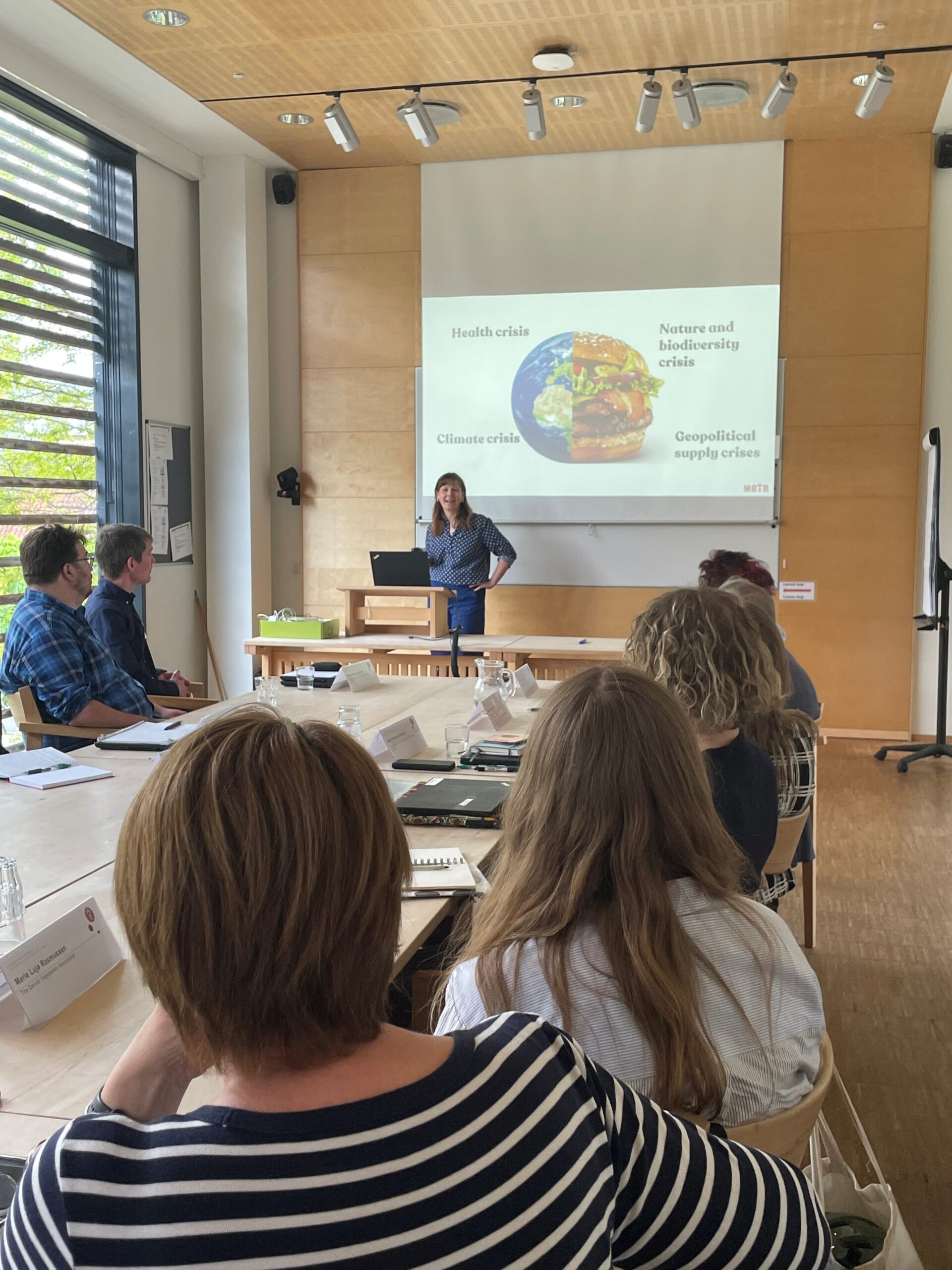
The first day, held at UCPH’s Department of Food and Resource Economics, began with an introduction to VISIONARY’s research on Danish and European food legumes, covering both value-chain dynamics and consumer preferences. Participants then heard about MATR Foods, a Danish company that has developed fermented legume-based foods and successfully turned them into a large-scale business. The presentation offered insights into the opportunities and challenges involved in bringing legume-based products from innovation to the market.
The group also learned about two initiatives supporting the development of the Danish plant-based food sector. The Plant-based Food Grant, a publicly funded programme providing almost 150 million EUR until 2030, supports projects aimed at developing plant-based foods and value chains. The Danish Legume Partnership brings together stakeholders from across the food system with the ambition of increasing Danes’ consumption of legumes. Discussions explored how these different approaches can contribute to strengthening value chains, and which lessons could be relevant in other countries.
The second day took participants into the field, with a visit to Bælgkompagniet, a large farm that has recently transitioned from pig production to cultivating and processing food legume crops. The visit provided a first-hand look at the practical opportunities and challenges of legume cultivation and processing, while also prompting discussion about what such a major business transition requires.
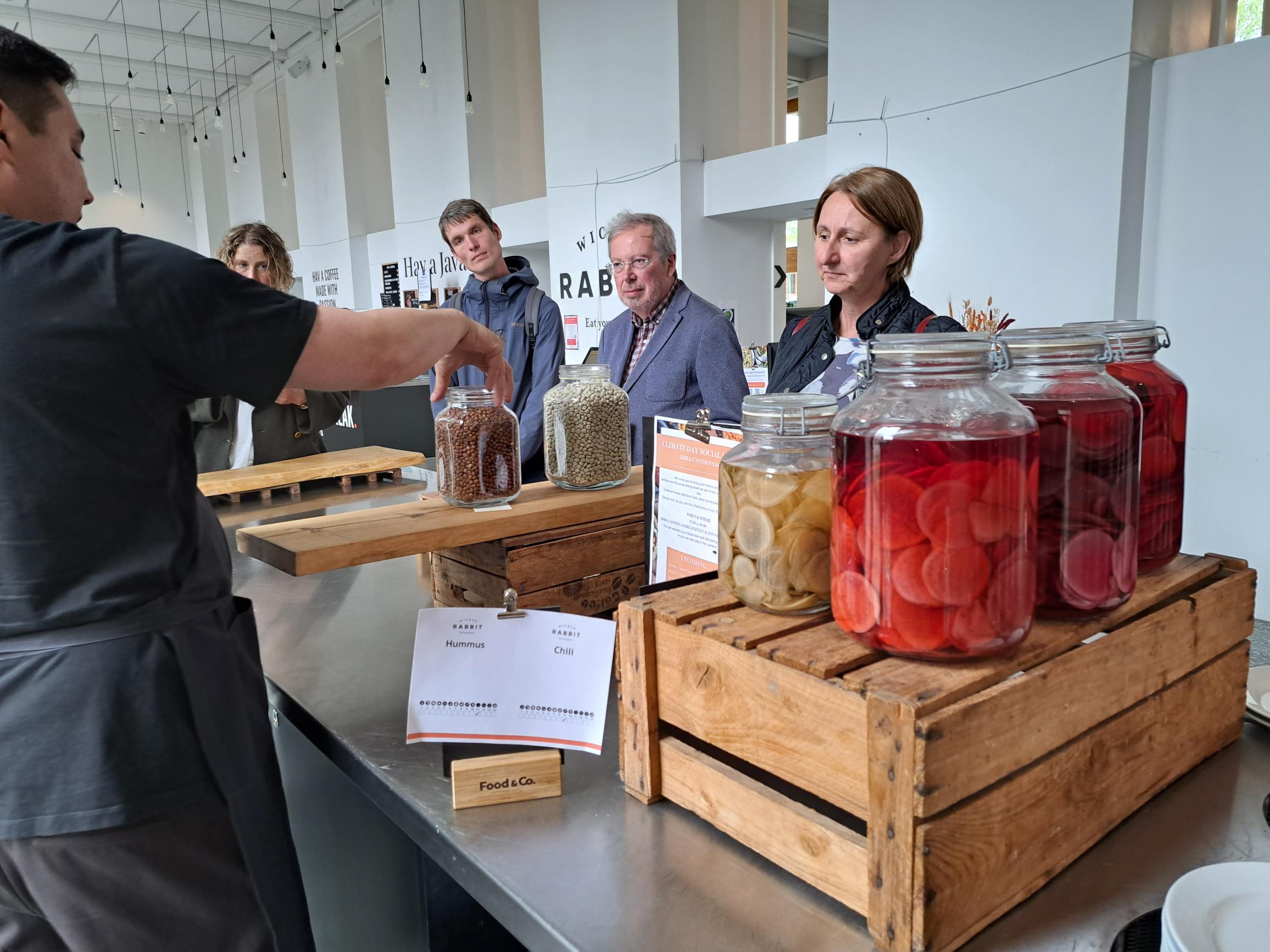
These discussions continued at UCPH, where participants visited the university’s local canteen, which has recently transitioned to a fully plant-based menu, with legumes as a central component. The visit offered a practical perspective on the consumption side of the value chain, showing how legumes can be incorporated into meals at scale and highlighting some of the considerations involved in changing menus, sourcing ingredients and making plant-based food appealing to consumers.
The visit concluded with a discussion on pathways towards increased production and consumption of food legumes in the participants’ respective countries. Overall, the two days highlighted the value of learning directly from those working with legumes in practice — and of exchanging experiences across national contexts. Together, these perspectives can provide inspiration for overcoming existing barriers and exploring what a stronger food legume sector could look like across Europe.