
For Scientists

Informations for Scientists.
Find all information relevant to you at one glance.

VISIONARY aims to improve the sustainability of agriculture by promoting those practices in food production systems that are more environmentally friendly, economically viable, and socio-culturally appropriate, and helping to remove the barriers to their adoption.

Methodology

At its core, VISIONARY uses methods from experimental and behavioural economics to identify barriers and appropriate behavioural interventions (nudges, education, incentives) for farmers and consumers. The novelty of VISIONARY lies in the combination of experimental methods with a systems thinking approach, considering the whole agri-food system as an influence on farmer decisions. The innovative combination of quantitative and qualitative data from a variety of methods is our important methodological contribution to more system based research. Comparability will be achieved by applying the same or similar methods across case studies in Denmark, Germany, Hungary, Italy, Poland, Romania, Spain, and the UK.

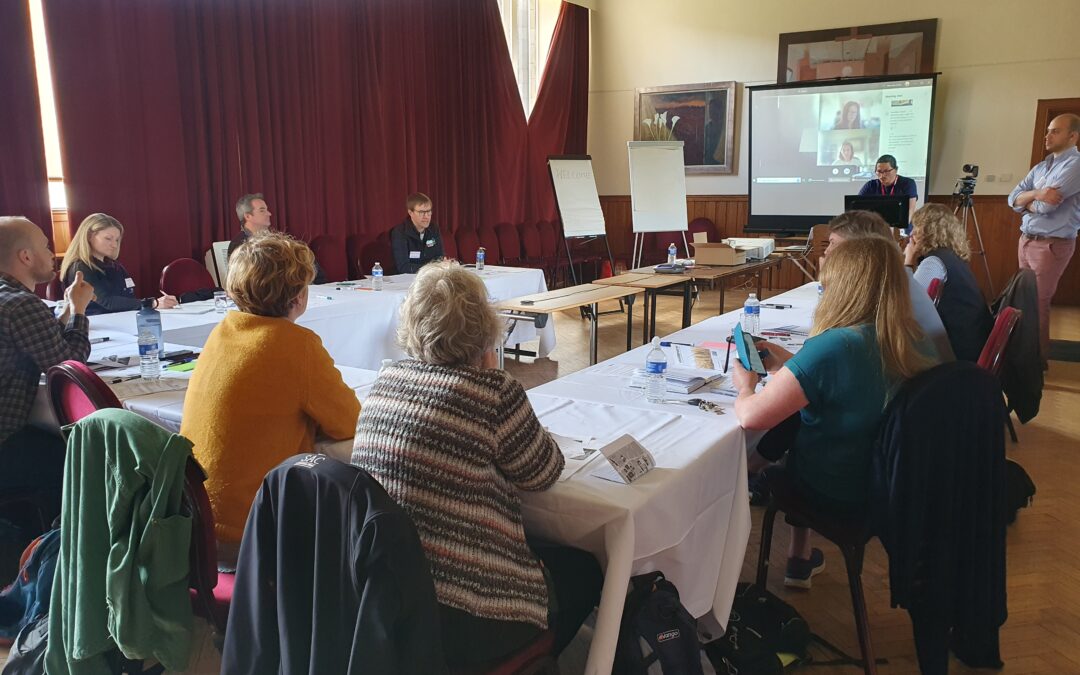
In order to achieve improved capacities, for researchers in behavioural and experimental research, as well as for policy makers and value chain actors to utilise such research, VISIONARY will work with these actors in Science-Policy-Interfaces set up alongside the case studies.

News

SPI of the month: Enhancing Poland’s short value chain

Can short value chains succeed in large urban centers? This question guided Science-Policy Interface (SPI) workshops held in Poland, organized by the University of Warsaw. The events brought together a diverse range of stakeholders – including government...

read more
Introducing… Global Nature Fund, Germany

Introducing… Global Nature Fund, Germany

Global Nature Fund (GNF) is a non-profit environmental foundation committed to protecting nature and biodiversity worldwide. Founded in 1998, GNF focuses on the sustainable use of natural resources, ecological conservation, and improving living conditions through...

read more
Cross-country visit to Trento, Italy

Cross-country visit to Trento, Italy

As part of the VISIONARY project’s ongoing commitment to fostering dialogue and collaboration among food system actors across Europe, the University of Trento hosted a two-day Cross Country Visit in the province of Trento on 23–24 June 2025. The event gathered a wide...

read more

Publications

Behavioural response to alternative policy instruments to reduce greenhouse gas emissions
4. November 2025
This report documents findings produced by Task 3.2 “Transition of agri-environmental systems to climate-neutral food systems” within WP3 “Agri-environmental policy experimentation”. The task aims to explore EU farmers’ acceptance of both compulsory measures (such as an agricultural emissions...
read more

This report documents findings produced by Task 3.2 “Transition of agri-environmental systems to climate-neutral food systems” within WP3 “Agri-environmental policy experimentation”. The task aims to explore EU farmers’ acceptance of both compulsory measures (such as an agricultural emissions trading scheme) and voluntary carbon markets. It will also examine other economic instruments, including carbon, or CO2e, taxes and innovative subsidy schemes (such as result-based payments (RBPs) and hybrid payments (HPs)), designed to encourage climate-friendly farming practices. In addition, Task 3.2 has the objective to investigate whether and to what extent behavioural factors affect farmers’ acceptability of such economic policy instruments. To address these objectives, two contextualized experiments involving a total of about 1,100 farmers were conducted, one in Italy and the other in Denmark.

Download
1.56 MB
The potential of a governmental label for dark green agri-environmental measures
4. November 2025
This report, prepared under Work Package 3 (WP3) of the VISIONARY project, contributes to the overarching aim of identifying policy levers that can support transitions towards sustainable farming and food systems in Europe. WP3 investigates how behavioural approaches and experimental methods can help...
read more

This report, prepared under Work Package 3 (WP3) of the VISIONARY project, contributes to the overarching aim of identifying policy levers that can support transitions towards sustainable farming and food systems in Europe. WP3 investigates how behavioural approaches and experimental methods can help design effective agri-environmental policy interventions to address three key transition challenges: climate neutrality, halting biodiversity loss, and improving water quality. In this context, our study focuses on the potential of a labelling framework for dark green agri-environmental climate measures (AECM) as one possible policy lever to incentivise farmer participation and thereby strengthen the biodiversity transition.

Download
1.54 MB
Promoting Balanced Growth of Organic Farming in the EU: Barriers, Drivers, and the Potential of future Public Procurement policy design
4. November 2025
The shift to organic farming is influenced by a mix of interconnected barriers and drivers. A review of existing research, mental models, workshops, and interviews highlighted common problems such as unstable demand, limited processing facilities, not enough advisory support, labour shortages, and inconsistent...
read more

The shift to organic farming is influenced by a mix of interconnected barriers and drivers. A review of existing research, mental models, workshops, and interviews highlighted common problems such as unstable demand, limited processing facilities, not enough advisory support, labour shortages, and inconsistent policies. At the same time, positive factors like farmer-to-farmer learning, advisory help, clear action plans, collaboration across different sectors, and public awareness campaigns were identified. These findings show that the move to organic farming is not blocked by a single issue but depends on how well the whole food system works and how different actors—farmers, advisors, processors, distributors, consumers, and policymakers—coordinate their efforts.

Download
2.03 MB
Testing design principles of collective action schemes to enhance sustainability of water resource use
18. September 2025
Water resource management at the landscape scale is vital for addressing environmental and hydrological challenges in European agriculture. Due to fragmented land ownership, management must extend beyond individual properties and align with hydrological systems, requiring collaborative governance involving...
read more

Water resource management at the landscape scale is vital for addressing environmental and hydrological challenges in European agriculture. Due to fragmented land ownership, management must extend beyond individual properties and align with hydrological systems, requiring collaborative governance involving farmers and other stakeholders. This study (Milestone 9) on motives and barriers of collective action to reduce the impact on water resources uses Elinor Ostrom’s design principles (DPs) as a diagnostic tool to assess institutional robustness in three cases: irrigation management in Spain and Hungary, and catchment-based nitrogen regulation in Denmark. The Spanish case shows strong alignment with DPs, featuring nested, user-driven organizations and legal recognition of collective rights. The Hungarian case shows strong top-down control, but lacks the capacity to implement complex and collective water management initiatives, as well as the necessary bottom-up cooperation, coordination and professional guidance. The Danish case diverges notably from DPs due to limited stakeholder involvement and user autonomy. These findings demonstrate how institutional context and governance design affect legitimacy and effectiveness in water management. While Ostrom’s principles offer a valuable institutional benchmark, they provide limited insight into behavioral factors influencing farmer participation. We propose that future research on Ostrom’s principles need to incorporate behavioral perspectives to better understand successes and failures of collective agri-environmental schemes for sustainable water resource use. Our follow-up work will move beyond institutional analysis to explore the behavioural levers and barriers in collective agri-environmental programs.

Download
815.40 KB
Agent-Based Modelling of food systems: A scoping review on incorporation of behavioural insights
29. July 2025
In this article, we present a scoping review of agent-based models (ABMs) in food systems, focusing on how behavioural insights are incorporated. The article was published in the "Environmental Modelling & Software Journal" and is the corresponding output to “Deliverable 5.3 - Review of food systems...
read more

In this article, we present a scoping review of agent-based models (ABMs) in food systems, focusing on how behavioural insights are incorporated. The article was published in the "Environmental Modelling & Software Journal" and is the corresponding output to “Deliverable 5.3 - Review of food systems models and their behavioural assumptions. We find that many models lack behavioural justification and highlight the need for a stronger foundation of behavioural assumptions.

We suggest the following tentative guidelines to support future ABM development in food system modelling:

  • Behavioural justification. Behavioural choices should be justified by theory or data. E.g., by using the MoHuB framework to identify relevant behavioural theories.
  • Model parsimony. Models should be kept as simple as possible by focusing on specific parts of the food system and limiting spatial scope to what’s necessary to answer the research question.
  • Transparency and documentation. The use of standardized protocols, such as ODD + D, is recommended to improve transparency, reproducibility, and comparability.
Download
1.71 MB
Mapping the contribution of selected case studies to VISIONARY
20. July 2025
This report (Deliverable 2.2) builds on the initial conceptual and analytical framework of the VISIONARY project and aims to map out how the case studies selected in VISIONARY complement each other to address key objectives for the project. The report aims to briefly outline the theoretical foundations...
read more

This report (Deliverable 2.2) builds on the initial conceptual and analytical framework of the VISIONARY project and aims to map out how the case studies selected in VISIONARY complement each other to address key objectives for the project. The report aims to briefly outline the theoretical foundations of our work and outline the approach taken in the case studies.

Download
1.12 MB
Literature-based mapping of drivers for behaviour change in the food system
20. July 2025
This study (Deliverable 2.1) consists of a systematic literature review to map levers and lock-ins to give an overview of drivers for behaviour change and their relevance to specific actors in the food system and specific value chains. This was achieved by performing an umbrella review of systematic...
read more

This study (Deliverable 2.1) consists of a systematic literature review to map levers and lock-ins to give an overview of drivers for behaviour change and their relevance to specific actors in the food system and specific value chains. This was achieved by performing an umbrella review of systematic and structured literature reviews conducted in relation to the behavioural aspects of sustainability transition in food systems. This review resulted in a systematic mapping of the factors influencing behavioural change of food system actors (so called 360° Reviews) and a narrative synthesis of the recommendations made by the selected reviews.

Download
4.35 MB
Transdisciplinary policy mapping of barriers and interventions for food system sustainability
7. March 2025
Report on the generic and specific drivers associated with the policy context This Deliverable 6.1 compiles, analyses and contrasts the outcomes from two tasks of VISIONARYs ‘Science-Policy Interfaces and relationship building’. The two taks ‘Policy and regulatory context mapping’ and ‘Participatory...
read more

Report on the generic and specific drivers associated with the policy context
This Deliverable 6.1 compiles, analyses and contrasts the outcomes from two tasks of VISIONARYs ‘Science-Policy Interfaces and relationship building’. The two taks ‘Policy and regulatory context mapping’ and ‘Participatory foresight exercises’ ran in parallel and intertwined. The purpose of this analysis is two-fold. First, it aims to feed into the design of the experimental research to be undertaken in the various empirical tasks included in other VISIONARY work packages. Second, it allows for identifying and discussing relevant policy gaps that need to be tackled in the EU and UK policy cycles to come.

Download
970.31 KB
Working paper on drivers and barriers in value chain initiatives for sustainable production and consumption
28. February 2025
This working paper on drivers and barriers in value chain initiatives is part of VISIONARY project Milestone 15. This document presents an analysis of drivers and barriers to enabling sustainability innovation in seven agribusiness initiatives in seven partner countries (Denmark, Germany, Hungary, Romania,...
read more

This working paper on drivers and barriers in value chain initiatives is part of VISIONARY project Milestone 15. This document presents an analysis of drivers and barriers to enabling sustainability innovation in seven agribusiness initiatives in seven partner countries (Denmark, Germany, Hungary, Romania, Spain, Poland, UK).

Download
975.33 KB
Uptake of plant-based protein products - drivers and barriers
2. September 2024
This report presents the findings of a study conducted as part of the VISIONARY project, which explores the challenges and opportunities within European food legume value chains. The study focuses on identifying the barriers that limit the adoption of plant-based proteins, particularly legumes, in Denmark,...
read more

This report presents the findings of a study conducted as part of the VISIONARY project, which explores the challenges and opportunities within European food legume value chains. The study focuses on identifying the barriers that limit the adoption of plant-based proteins, particularly legumes, in Denmark, Germany, Poland, and Spain. It also explores potential strategies and levers to boost the uptake of these products. The key findings highlight the obstacles to adoption and pinpoint leverage points that could drive greater acceptance of legumes in these countries.

Download
825.38 KB
Value Chain Analysis
30. April 2024
This report marks a significant step in our exploration of sustainable value chains through detailed case studies, focusing on value chain initiatives and business models. We examine individual case studies across seven partner countries: Denmark, Germany, Hungary, Romania, Spain, Poland, and the UK....
read more

This report marks a significant step in our exploration of sustainable value chains through detailed case studies, focusing on value chain initiatives and business models. We examine individual case studies across seven partner countries: Denmark, Germany, Hungary, Romania, Spain, Poland, and the UK. Our analysis employs a practice-based approach to understanding how sustainability is integrated into these value chains. By studying real-world practices within organisations and across supply chains, we gain insights into the connections—both supportive and challenging—that impact sustainability efforts. This perspective sheds new light on the internal dynamics and broader implications of sustainable practices within value chains.

Download
1.68 MB
List of planned dissemination activities
30. November 2023
Work Package 1: Engagement, communication, dissemination and exploitation Milestone 1    ...
read more

Work Package 1: Engagement, communication, dissemination and exploitation
Milestone 1 


Download
501.36 KB
Visionary Project Flyer
29. November 2023
Find all key facts about VISIONARY at one glance. ...
read more

Find all key facts about VISIONARY at one glance.

Download
528 KB
Analytical Framework
6. September 2023
This Analytical Framework will steer the empirical research of the VISIONARY project, with regards to policy interventions, to novel value chain initiatives and business models, and to leverage points in the agri-food systems. The Analytical Framework adopts a novel approach combining two substantially...
read more

This Analytical Framework will steer the empirical research of the VISIONARY project, with regards to policy interventions, to novel value chain initiatives and business models, and to leverage points in the agri-food systems. The Analytical Framework adopts a novel approach combining two substantially different approaches: quantitative, experimental and behavioural economics on the one hand, and qualitative, comprehensive systems thinking approaches on the other.

Download
3.05 MB
SPI Foresight Workshops 2023
31. August 2023
This publication gives an overview of the 16 foresight workshops undertaken in eight European countries with our science policy interfaces (SPI) participants - around 270 stakeholders from the food system, among them farmers, policymakers, scientists, retailers and NGOs. The foresight exercise framed...
read more

This publication gives an overview of the 16 foresight workshops undertaken in eight European countries with our science policy interfaces (SPI) participants - around 270 stakeholders from the food system, among them farmers, policymakers, scientists, retailers and NGOs. The foresight exercise framed their discussion of some of the most pressing issues of our food systems: agricultural water management, the future of organic food and farming, and the promotion of plant-based products along the value chain.

Download
0.5 MB
Initial Conceptual Framework
31. May 2023
This Initial Conceptual Framework assembles VISIONARY’s theoretical and conceptual foundations, explaining the systemic character of the food system and its transitions towards sustainability, the role of food actors’ behavioural factors in conditioning such transition and the interaction between...
read more

This Initial Conceptual Framework assembles VISIONARY’s theoretical and conceptual foundations, explaining the systemic character of the food system and its transitions towards sustainability, the role of food actors’ behavioural factors in conditioning such transition and the interaction between research and policy-making to accelerate. This initial framework sets the foundations for the ‘Empirically grounded Conceptual Framework’ to be released in the summer of 2025. After a preliminary review of the approaches revolving around food system transition towards sustainability and its behavioural dimension (in particular of farmers and consumers), the document focuses on two main domains: ‘behavioural food policies’ and ‘sustainable business models’. Finally, the document deepens into the transdisciplinary approach of the project, based upon the concept and implementation of Science-Policy Interfaces.

Download
1.13 MB

    Case Studies

    Domestic value chain for protein crops for food

    This case study seeks to identify the success factors of a Danish value chain providing food legumes grown in Denmark. Legumes for human consumption play a minor role in Danish agriculture. Likewise, legumes play a relatively small role in Danish diets. There ...

    Sustainable milk production in dairy cooperatives

    Through the analysis of the experiences of various dairy cooperatives, the aim is to provide knowledge on a number of aspects related to sustainable cooperative milk production: reduction of the carbon footprint of cow's milk, good animal feeding practices, ...

    The Local Gastronomic Points scheme (LGPs)

    The Local Gastronomic Points scheme (LGPs) is a business model based on adding value to products from agricultural households by establishing small-scale, family-type public food establishments. The concept was developed by the
    Watch this space for upcoming case studies.

    Events

    There are no upcoming events at this time.